
NRF 2026 retail trends made one thing clear early on: retail is prioritizing execution over hype.
NRF 2026 had plenty of technology on display, but the real momentum was quieter. Walking the floor as Thread Advisory Group, the conversations weren’t about chasing the next shiny thing — they were about making fewer, better decisions that actually hold up in the real world.
Here are the five takeaways that actually mattered.
1. AI Isn’t the Headline Anymore — Execution Is
Yes, AI was everywhere. Of course it was.
But the most meaningful conversations weren’t about models, agents, or dashboards. They were about very real questions retailers are asking themselves:
- Can our teams actually use this?
- Does this reduce work or quietly add more?
Retail is finally moving past “look what our tech can do” and toward “show me how this works in a real life.” That shift alone made NRF feel more grounded and more useful.

2. Merchandising Systems Are Growing Up
One of the quieter but most important NRF 2026 retail trends at NRF showed up in merchandising technology.
Across merchandising, demand forecasting, merchandising planning, assortment planning, PIM, and PLM, the story wasn’t about perfection—it was about adaptability.
What we heard consistently:
- Forecasting is less about being “right” and more about adjusting faster
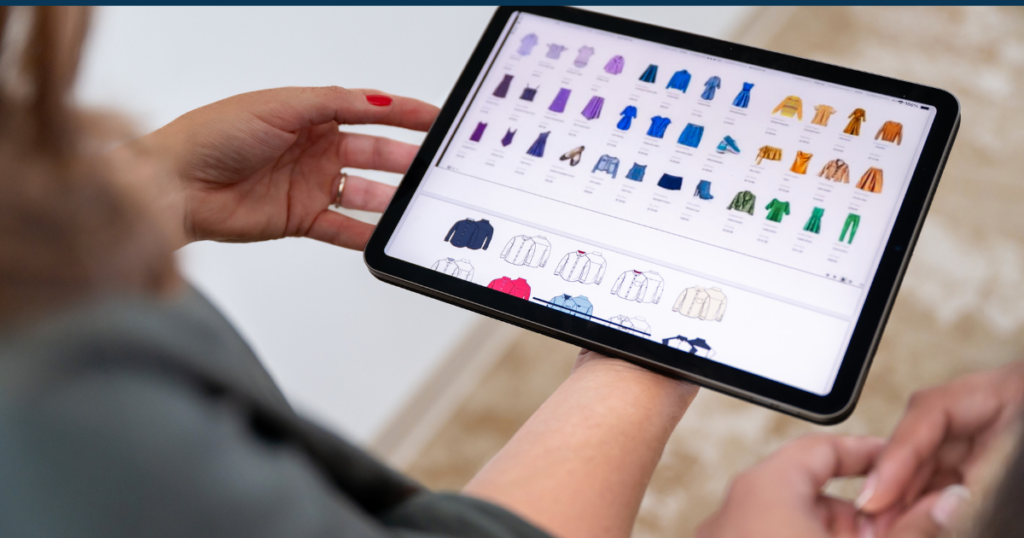
- Assortment planning is becoming more visual and scenario-based
- Merchants want to see tradeoffs clearly, not just outputs
- PIM and PLM are moving upstream, no longer treated as back-office tools
Merchants aren’t looking for a single answer. They’re looking for systems that help them respond when reality changes (because it always does).
Tools that pull in cultural and behavioral signals earlier, like Quid are helping teams understand why demand is shifting, not just that it has.
3. Loss Prevention Went from “Interesting” to Non-Negotiable
If there was one area where debate stopped, it was loss prevention. AI-powered loss prevention is no longer a nice-to-have. It’s necessary.
Computer vision, RFID, and edge-based analytics are now:
- Live in stores
- Catching theft in real time
- Delivering measurable ROI
What stood out most was how practical these solutions have become — focused on high-risk zones, using existing cameras, and avoiding unnecessary complexity.

4. Store Operations Quietly Became the Star
Some of the most important signals at NRF didn’t come from the main stage — they came from the show floor. Store execution is finally being treated like the strategic advantage it is.
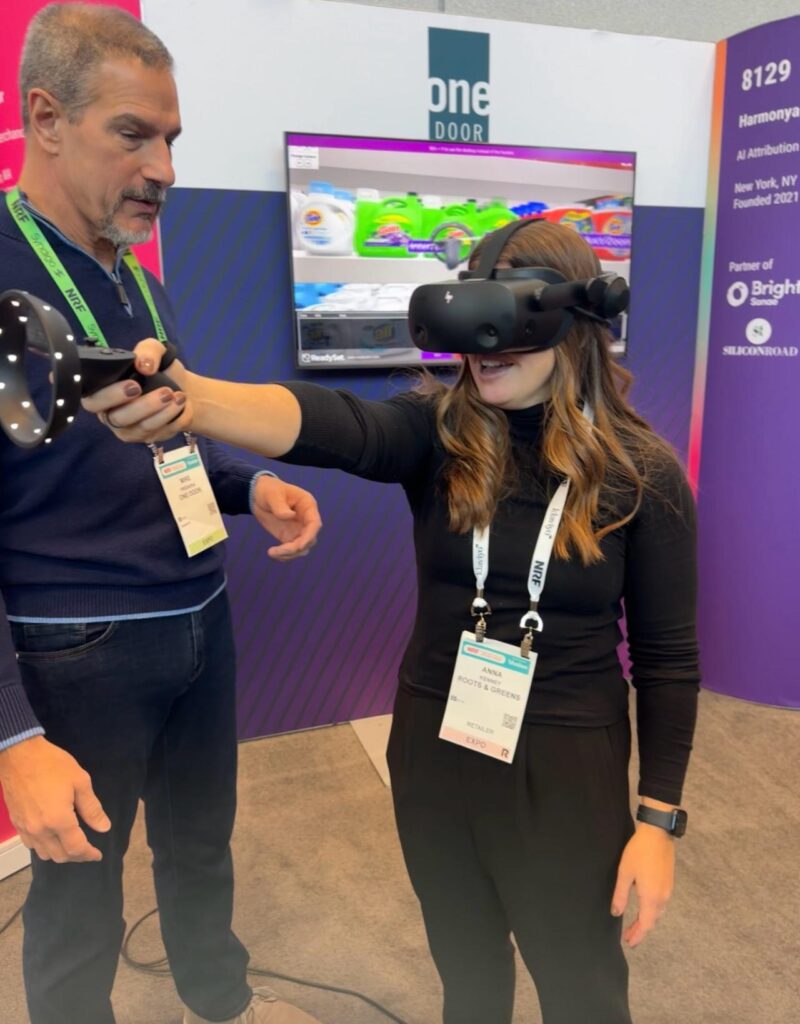
One standout example was One Door and its new Studio application, which addresses a challenge every retail team knows well: translating ideas into clear, executable direction when everything lives in flat images and static decks.
Studio allows teams to see the work before it ever hits the floor. By bringing visual merchandising strategies into 3D and VR, teams can pressure-test ideas earlier, understand shopper impact sooner, and align more clearly across partners and field teams — before stores are left to interpret on their own.
The result is simple but powerful: clearer expectations, faster execution, and fewer misses. This is what it looks like when HQ supports stores instead of broadcasting at them.
At the same time, platforms like Zipline and Opterus Inc. are becoming the one-stop shop for store teams — communication, tasks, learning, and schedules all in one place. When everything lives in the palm of an associate’s hand, teams stay on the sales floor, not hunting for answers.
O5. Leadership Is the Real Differentiator in 2026
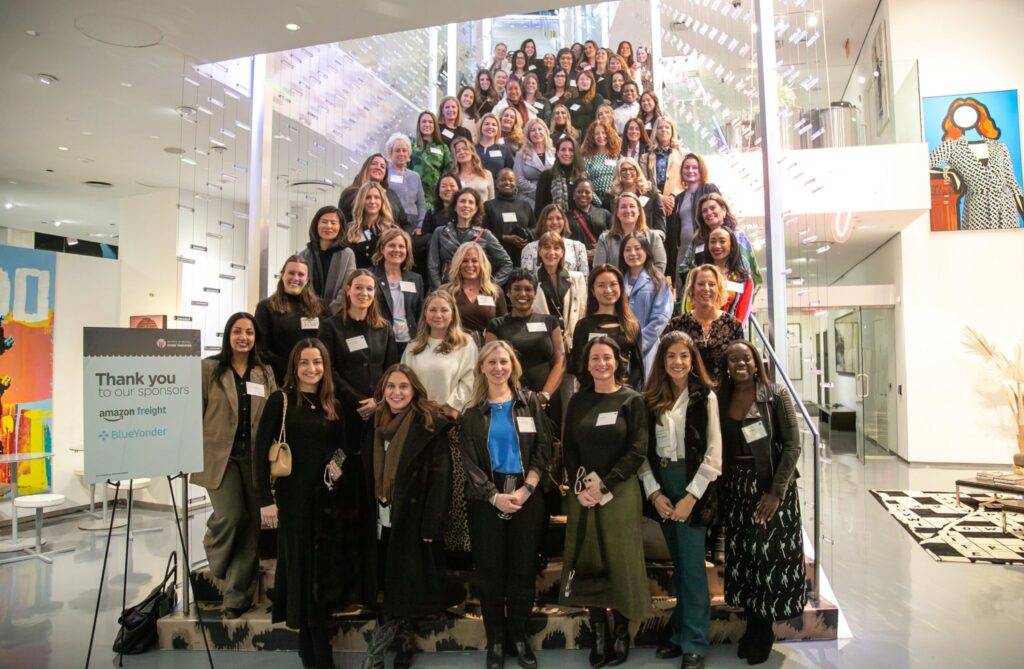
One of the most grounding moments of the week didn’t happen on the NRF show floor. It happened at an evening hosted by the Women in Retail Leadership Circle at the iconic Diane von Furstenberg flagship.
After days of talking about AI, automation, and scale, the conversation came back to something much simpler — and much harder.
Leadership.
What we heard from senior retail leaders was clear: leadership in 2026 isn’t about choosing between being human or being decisive. It’s about holding both.
We’re in a “yes, and…” era of leadership:
- High emotional intelligence
- Listening before speaking
- Empathy paired with accountability
- Decisiveness with adaptability
- Executive self-regulation — be the thermostat, not the thermometer
As retail gets faster and more complex, teams aren’t looking for louder leaders. They’re looking for steadier ones — leaders who create clarity when the path isn’t fully defined and understand that change is emotional, not just operational.
NRF showed us what’s possible with technology. That evening reminded us what actually makes change stick.
Thread’s Take: NRF 2026 didn’t feel loud.
It felt focused.
Taken together, these NRF 2026 retail trends point to a more focused, execution-driven era for retail.
Retail is making fewer bets — and better ones:
- Saying no to tools that don’t stick
- Designing for how work actually happens
- Connecting planning to execution
- Letting learning live inside the flow of work
- Treating leadership as strategy, not an afterthought
That’s the work we care about at Thread.
Not hype.
Not slides.
But the human work of making change make sense — and stick.
If NRF sparked questions about where to simplify, where to invest, and where to pause, we’re always up for that conversation.
Let’s talk → https://threadadvisorygroup.com/contact/
#NRF2026 #RetailBigShow #ThreadAdvisoryGroup #RetailLeadership #Merchandising #StoreOperations #RetailExecution #AIinRetail #WomeninRetail









TAG - You're It!